

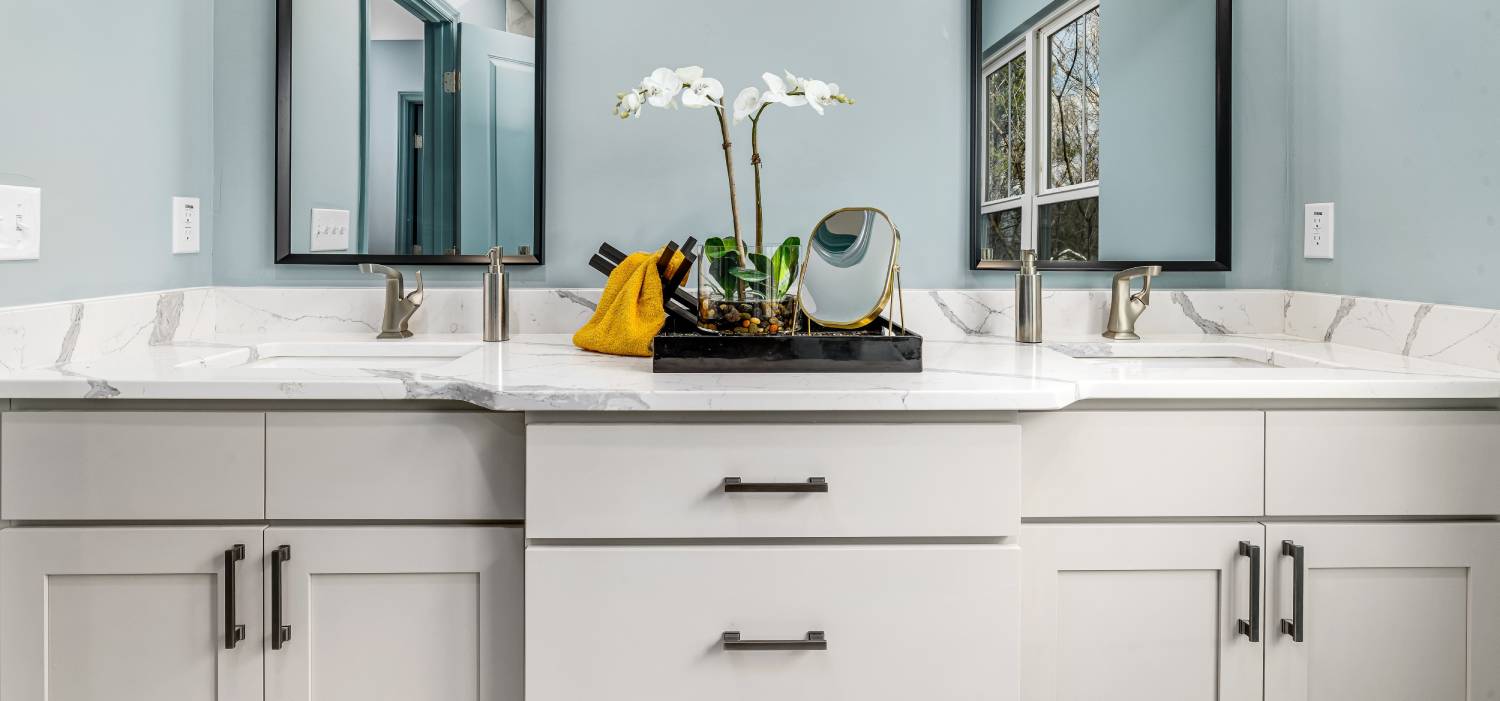
Installing a stone vanity top requires careful evaluation of material performance, accurate measurements, design compatibility, sink configuration, professional installation, and budget alignment. A stone vanity top is not simply a decorative upgrade. It is a structural surface exposed to daily moisture, temperature changes, cleaning chemicals, and repeated impact.
Selecting the right combination of material, dimensions, sink type, and installer determines long-term durability, maintenance requirements, and overall bathroom aesthetics.
Below is a structured guide to making informed decisions before starting your project.
What Is the Best Material for a Stone Vanity Top?
The best material for a stone vanity top depends on moisture resistance, durability, maintenance tolerance, weight, and visual preference. Bathrooms are high-humidity environments, so surface porosity and structural strength matter significantly.
Each material offers distinct performance characteristics.
Marble
Marble vanity tops deliver a refined, high-end aesthetic defined by natural veining and light-reflective polish. Marble is heat-resistant and suitable for humid conditions. However, it is a softer and more porous natural stone, which means it requires sealing and consistent maintenance to prevent staining and etching from acidic products.
Best suited for homeowners prioritizing visual elegance and willing to maintain the surface properly.
Quartz
Quartz is an engineered stone composed of crushed natural quartz combined with resin binders. It is non-porous, highly resistant to stains, and requires minimal maintenance. Because it does not need sealing, it is one of the most practical materials for bathrooms.
Quartz offers design consistency, durability, and ease of care, making it a strong choice for family bathrooms or high-use spaces.
Granite
Granite is one of the hardest natural stones available for countertops. It is resistant to scratches, heat, and most household chemicals. When properly sealed, granite performs well in moisture-prone environments.
It is ideal for homeowners seeking a balance of natural beauty and structural strength.
Porcelain
Porcelain slabs are manufactured at high temperatures, resulting in a dense, low-porosity surface. They are resistant to stains, water, and surface wear. Porcelain is lightweight compared to many natural stones and is relatively easy to maintain.
It suits contemporary and minimalist bathroom designs where durability and clean lines are priorities.
Quartzite
Quartzite is a natural stone known for its strength and crystalline appearance. It is harder than marble and offers strong resistance to scratches and heat. However, due to its density and weight, fabrication and installation can be more complex.
Quartzite works well in bathrooms where durability and distinctive natural texture are desired.
How Do You Accurately Measure for a Stone Vanity Top?
Accurate measurement determines fabrication precision, installation efficiency, and cost control. Since vanity cabinets often vary in size, never assume standard dimensions.
Follow this structured approach:
- Measure the full width from one end to the other.
- Measure the depth from the front edge to the back wall.
- If the vanity sits between two walls, measure both the front and back widths to account for wall irregularities.
- Add approximately one inch of overhang to the front and exposed sides for proper edge projection.
- Confirm whether a sink cutout or tap holes are required before fabrication.
If replacing an existing countertop, measure the cabinet base rather than relying on the old surface dimensions. Precision at this stage prevents costly slab modifications later.
How Does Vanity Style Influence Material Selection?
Material selection should reinforce the bathroom’s architectural and design direction. A stone vanity top must integrate visually and proportionally with cabinetry, flooring, wall finishes, and fixtures.
Consider the following alignment principles:
- Modern and minimalist designs pair well with quartz or porcelain due to clean edges and consistent patterns.
- Traditional or luxury-inspired bathrooms often benefit from marble or granite with natural movement and veining.
- Contemporary spaces may use quartzite for subtle texture and tonal depth.
Beyond aesthetics, ensure that the material enhances usability. A visually striking stone that stains easily in a high-traffic bathroom may create long-term maintenance frustration.
Suitability must balance design ambition and daily functionality.
Which Type of Sink Works Best with a Stone Vanity Top?
The sink configuration affects fabrication requirements, waterproofing performance, and installation complexity. Choosing the sink type before slab cutting is essential.
Undermount Sink
An undermount sink is installed beneath the stone surface, creating a seamless edge. This configuration reduces exposed seams and allows easy cleaning of the countertop surface directly into the basin.
It provides a refined appearance but requires precise fabrication and secure mounting support.
Drop-In Sink
A drop-in sink sits within a pre-cut opening, with its rim resting on top of the countertop. It is easier to install and often more cost-effective.
While functional, the visible rim can collect moisture and debris around the edge.
Integrated Sink
An integrated sink is fabricated from the same material as the vanity top, forming a single continuous unit. This creates a seamless, modern appearance and simplifies cleaning.
It eliminates joint lines between the basin and surface, reducing moisture penetration risk.
Each sink type carries installation and maintenance implications. Finalize your choice before fabrication begins.
Should You Hire a Professional Stone Supplier and Installer?
Professional installation ensures accurate templating, correct slab handling, structural support, and secure sink integration. Stone materials are heavy, fragile during transport, and require specialized cutting tools.
Common risks of DIY installation include:
- Inaccurate measurements
- Improper sealing
- Slab cracking during handling
- Misaligned sink cutouts
- Structural stress on cabinetry
Working with an experienced supplier and contractor reduces material waste and long-term repair costs. Professional fabrication also improves finish quality and joint precision.
How Should You Plan Your Budget for a Stone Vanity Top Installation?
Budget planning should include more than slab cost alone. A comprehensive cost evaluation includes:
- Material price per square metre
- Fabrication and edge profiling
- Sink cutouts and tap holes
- Sealing treatments
- Installation labour
- Removal of existing countertop
- Delivery and handling
Premium materials such as marble and quartzite may increase both material and installation costs due to weight and handling complexity.
Align your budget with performance priorities. A lower upfront cost may result in higher maintenance or earlier replacement if the material is not suited to bathroom conditions.
Why Choose Stone Interiors for Stone Vanity Top Installation?
A successful stone vanity top installation depends on material expertise, fabrication precision, and professional installation practices.
Stone Interiors provides tailored manufacturing and installation services to ensure your vanity top meets structural, aesthetic, and functional requirements. From material selection to final placement, proper planning ensures durability, visual impact, and long-term value.
For a detailed quote and project consultation, contact Stone Interiors at (03) 9357 0096 or email stoneinteriors1@optusnet.com.au to discuss your installation requirements.
Key Takeaways
- The best stone vanity top material balances moisture resistance, durability, maintenance level, and visual compatibility.
- Quartz offers low maintenance and non-porous performance, while marble and quartzite provide distinctive natural aesthetics.
- Accurate measurements are essential to avoid fabrication errors and installation delays.
- Sink type must be selected before slab cutting to ensure correct structural and waterproof integration.
- Professional installation reduces structural risk and improves long-term performance.
- Budget planning must account for fabrication, installation, sealing, and removal costs, not just slab price.
- Material suitability should prioritize long-term functionality over short-term visual appeal.